
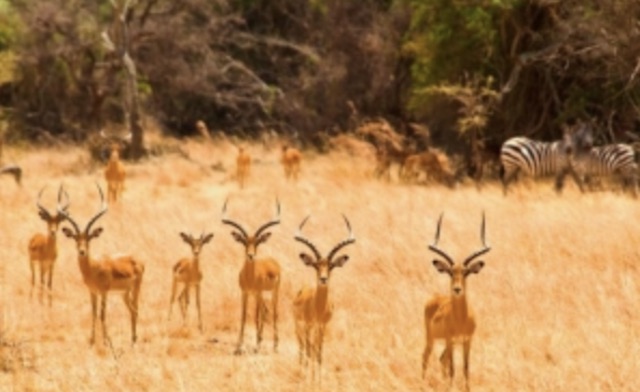
Usually my “Talks” in History 498 are based on places I have actually visited and filmed. But this morning a news article about Akagera National Park in Rwanda caught my eye. We will look at the article later but first here is some information about the park from the official web site. I liked the way the park’s message is worded, most likely written by a Rwandan who is somewhat conversant in English — quite understandable but with some phrasing that suggests an authentic indigenous voice. Here are some passages from the official site:
Rwanda, the Country
“Rwanda is the fourth smallest country in the world measuring about 26,300 square kilometers [about 10,000 square miles] and is landlocked and mountainous. It is due to this that it is nicknamed “the land of a thousand hills”. With a population of 1.13million people (as per 2013 statistics), Rwanda is the most densely populated country in Africa. However, Rwanda is also a jewel in Africa’s crown. It is the best performing country in East and Central Africa, economically and its landscape of uplands and hills covered with farmer’s terraces of crops makes for a spellbinding view.”
The Park Itself
Akagera National Park is a little piece of heaven found in North Eastern Rwanda, at the country’s border with Tanzania. It is dominated by swamps and small lakes with flow in the wake of River Kagera. All the water sources work together to create a piece of spectacular scenery. It is quite a remarkable eco-system. The Park was obviously named after River Kagera.
The game drive[s] here are like opening a present and each game drive holds a full new surprise as nature reveals its treasures in form of wonders that are so scenic, the wildlife like buffalos, antelopes including; the elands, topis, Maasai girafffes, monkeys, savannah birds, civets, leopards, the hyenas, as well as the serval cats. The game drives also mean that you will be accompanied by the guide who is so knowledgeable about the flora and the fauna that is found in the park.
The Wonders of a Night Drive Through the Park
“About the Nocturnal, the night game drives are so thrilling since you adventure out with a spot light to view the wildlife creatures of the night that are found in Akagera National Park. This night game drive through the park is different from that of during the day since at night, there is a big opportunity to view the predators on the prowl as they look for dinner. You will also see a few leopards, lions, civets, serval cats, the hyenas, birds as well as the bush babies with their large eyes.”
Lodging in the Karenge Bush Camp
“Situated in Akagera National Park, the seasonal Karenge Bush camp is also set up two times in the year and removed out, and leaving no trace of its being. Just between this campsite and the lodge is a Karenge and it aims to leave a light footprint on the earth, echoed in the name Karenge that means little foot.
“The word Karenge also means a ‘small foot’ in Kinyarwanda language. This also supports well with the camp’s goal to be so eco-friendly and leaves as a small environmental foot print as possible. Since it’s a seasonal camp, it’s open for some periods during each year and changes locations each and every time. This camp is constructed with the ecofriendly materials that are all removed when the camp is decomposed at the end of a season. It’s also a very close atmosphere, since the whole camp fits 12 people across the 6 tents.
“These tents are also raised which reduces the risk of animal entry, and also increases safety. Each of tents has two comfy beds [with the] usual basics like the towels and the toiletries. One of my bath rooms was about 10 paces from my tent and wasn’t fully surrounded, which was fine by day and a little threatening at night. There was also something liberating about knowing it all hangs out with nature and common sense told me to look into the outside, and in case an animal decided to amble by.”
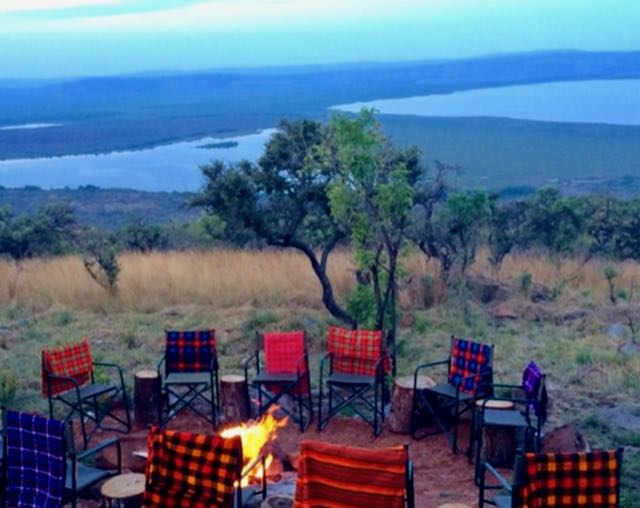
Karenge Bush Camp (Looks inviting!)
I do not know why, but for some reason I find the idea of an animal “deciding to amble by” quite intriguing — both the concept and the wording. Somehow I cannot imagine Henry David Thoreau or John Muir using just those words!
This brings me to the “lesson” for this talk. One thing we are looking for in History 498 is patterns in National Park history and administration. So in looking at Akagera National Park so far, what kinds of arrangements, values, and promotion do you see that would be familiar to John Muir, say, or Stephen Mather?
Now, one more piece of information about Akagera to evaluate in the same way. Here is an article I ran across about poachers in the park: Six men sentenced to five years for poaching in Akagera National Park. Did we ever have poaching problems in the American parks/ What did we do about it? Notice not only the penalties levied on the poachers, but also the way the the park tries to dissuade those living near the park to value its wildlife.